Training style
Dumbbell strength
A pair of dumbbells and a plan: the simplest way to get properly strong at home.
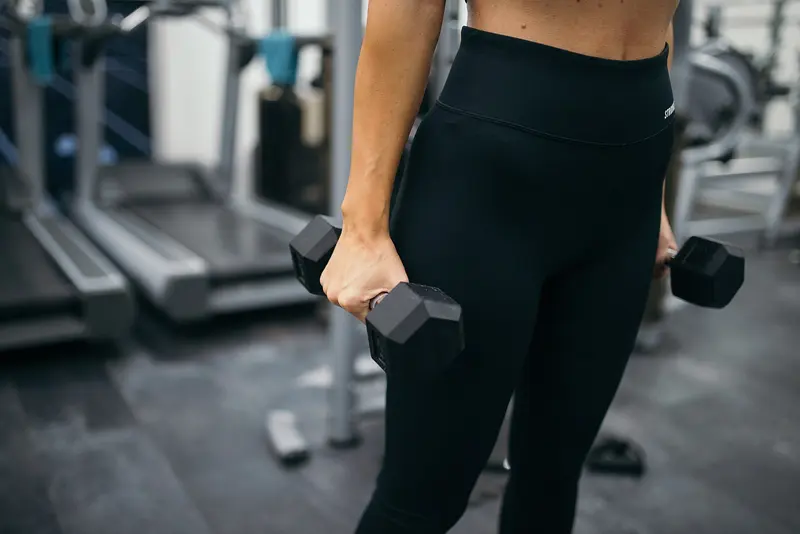
Lifting weights is one of the muscle-strengthening activities named in the UK guidelines — and dumbbells (or a kettlebell) let you keep progressing for years.
Why lift?
The UK Chief Medical Officers' guidelines explain that strengthening activities help to maintain strength in adulthood and "to delay the natural decline in muscle mass and bone density which occurs from around 50 years of age". The Royal Osteoporosis Society notes that as your muscles work against resistance — your body weight, a band or weights like dumbbells — they pull on your bones, which helps maintain or improve their strength.
Choosing your weights
Pick a weight you can lift for the target reps with good form, where the last two or three feel like real work. When the top of the rep range starts to feel easy, move up to the next weight. Our dumbbell kit guide explains fixed versus adjustable sets.
How we programme it
Our dumbbell workouts use straight sets: 2–3 sets of each exercise with a rest between, working the legs, push, pull and core. That makes it easy to track your progress.
Watch: from official sources
Dumbbell strength workouts
Sources
- UK Chief Medical Officers' physical activity guidelines (GOV.UK, updated July 2026) — checked 3 Oct 2026
- Royal Osteoporosis Society: Exercise for bones — checked 3 Oct 2026