Life stage & health
Pregnancy & postnatal
Staying active for you and your baby — always with your midwife or GP in the loop.
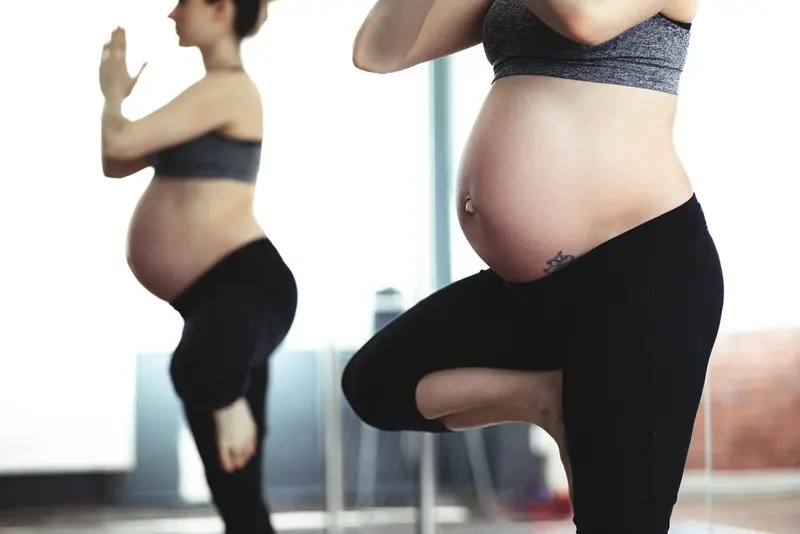
The NHS says exercise is safe for you and your baby in pregnancy, and the UK Chief Medical Officers say there is no evidence of harm. Start any new exercise gently, and check with your midwife or GP about what's right for you.
In pregnancy
The NHS and the UK CMOs recommend aiming for 150 minutes of moderate activity a week — the same as other adults — including 2 sessions of muscle-strengthening exercise. You can talk but not sing at moderate intensity. If you're new to exercise, start with about 10 minutes a day and build up gradually. If you were already active, you can usually keep going, adapting as your bump grows.
The NHS advises:
- tell your instructor you're pregnant, drink water, keep cool and stop if you feel uncomfortable, too hot or unwell;
- avoid sports with a risk of falling or bumping your tummy (such as hockey, rugby or mountain biking), exercising on an empty stomach, and scuba diving;
- in later pregnancy, avoid lying flat on your back for more than a few minutes;
- don't start a new vigorous activity, such as running.
The CMOs sum it up: listen to your body and adapt — and don't bump the bump.
After birth
After a straightforward birth, the NHS says you can start gentle exercise — walking, gentle stretches and pelvic floor exercises — as soon as you feel up to it. Get advice at your 6-week postnatal check before high-impact exercise such as aerobics or running. After a caesarean or complicated delivery, recovery takes longer: talk to your midwife, health visitor or GP before anything strenuous.
The CMOs advise starting pelvic floor exercises as soon as you can and continuing daily, and building back up to muscle strengthening twice a week. After the 6–8 week postnatal check, more intense activity can gradually resume, building up over at least three months.
Your tummy muscles
It's common for the tummy muscles to separate during pregnancy. The NHS suggests avoiding sit-ups, planks and high-impact exercise to start with, and contacting your GP if the gap is still obvious 8 weeks after birth — they can refer you to a physiotherapist.
Kit
The NHS suggests not relying on your pre-pregnancy sports bra — get measured for a new one — and possibly getting measured for new shoes, as feet can change during pregnancy.
Watch: from official sources
Pregnancy & postnatal workouts
Sources
- NHS: Exercise in pregnancy — checked 3 Oct 2026
- CMO infographic: physical activity for pregnant women (GOV.UK) — checked 3 Oct 2026
- CMO infographic: physical activity for women after childbirth (GOV.UK) — checked 3 Oct 2026
- NHS: Keeping fit and healthy with a baby — checked 3 Oct 2026
- NHS: Your post-pregnancy body — checked 3 Oct 2026
- RCOG: Physical activity and pregnancy — checked 3 Oct 2026
- UK Chief Medical Officers' physical activity guidelines (GOV.UK, updated July 2026) — checked 3 Oct 2026