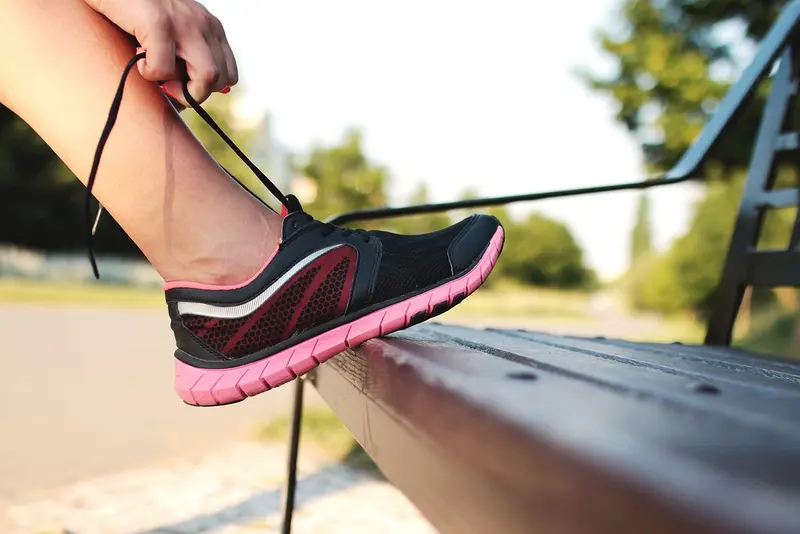
Starting is the hardest part — and the most important. The UK Chief Medical Officers point out that the biggest health gains come for people who are currently doing the least. Here's how to begin safely.
Check in first if you need to
The NHS advises speaking to your GP first if you haven't exercised for some time, or if you have medical conditions or concerns. It also makes sense to check with a professional before starting if:
- you're pregnant or have recently had a baby — speak to your midwife, health visitor or GP;
- you have pelvic floor symptoms such as leaking;
- you have osteoporosis, have had a fracture, or have fallen recently;
- you have an injury or ongoing pain.
Start small
- Begin with short sessions — 10 minutes is a real start. The CMOs say small bouts of activity, even under 10 minutes, add up.
- Choose low-impact and beginner workouts first, and the easier option of each exercise.
- Leave a day between strength sessions at first.
Warm up for at least 6 minutes
The NHS warm-up takes at least 6 minutes: march on the spot for 3 minutes, then heel digs (aim for 60 in 60 seconds), knee lifts (30 in 30 seconds), shoulder rolls (2 sets of 10) and small knee bends (10 repetitions, lowering no more than 10cm). Every workout on this site starts with a version of it.
Cool down
The NHS suggests about 5 minutes of gentle stretches afterwards — buttocks, hamstrings, inner thighs, calves and thighs — holding each for 15 to 20 seconds. Try our quick stretch and cool-down.
How hard should it feel?
Use the NHS talk test. At moderate intensity you can talk, but not sing. At vigorous intensity you can't say more than a few words without pausing for breath. Most beginner sessions should feel moderate.
For strength exercises, the NHS says work to the point where you need a short rest before repeating. The last couple of repetitions should feel like effort — but your form should stay tidy.
Normal versus not
- Expected: feeling warm, breathing faster and muscles feeling tired by the end of a set. If your muscles feel stiff after trying something new, ease back in with lighter movement.
- Stop and get advice: pain (especially sharp or joint pain), dizziness or feeling faint, or feeling unwell. If you have chest pain or severe breathlessness, get urgent medical help — call 999 in an emergency. For non-urgent health advice you can use NHS 111.
Set yourself up
- A clear space, a non-slip mat, and a sturdy chair without wheels for support.
- Comfortable clothes, supportive trainers, and a well-fitting sports bra.
- Water within reach.
Next steps
Pick a 4-week plan, or try Living-room strength. Read our health disclaimer too.
Sources
- NHS: Physical activity guidelines for adults aged 19 to 64 — checked 3 Oct 2026
- NHS: How to warm up before exercising — checked 3 Oct 2026
- NHS: How to stretch after exercising — checked 3 Oct 2026
- UK Chief Medical Officers' physical activity guidelines (GOV.UK) — checked 3 Oct 2026