Training style
Resistance bands
Light, cheap and packable — real strength training that fits in a drawer.
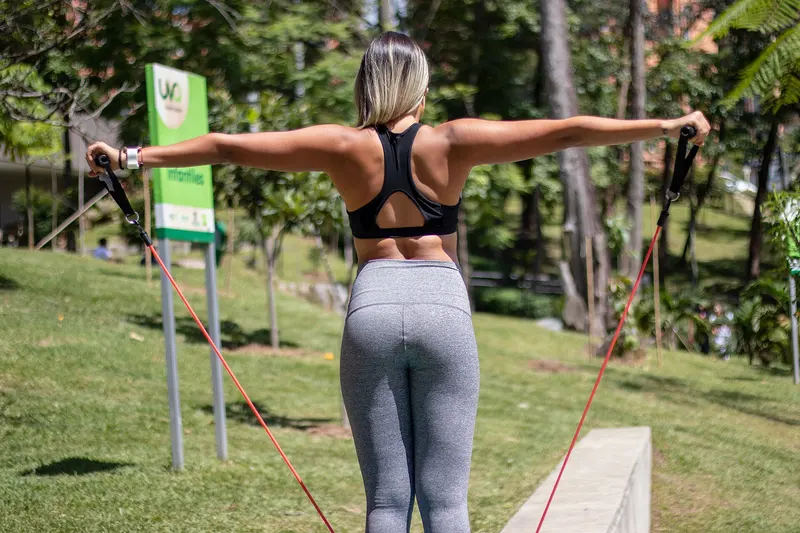
Bands give resistance that builds as they stretch, so they're kind to joints at the start of a movement and challenging at the end. They're named by the NHS as one way to strengthen muscles.
Types of band
- Long flat bands — versatile for rows, presses and stretching.
- Tube bands with handles — easier to grip; many come with a door anchor.
- Mini loop bands — small loops for the legs and hips (side steps, clamshells, bridges).
See our resistance band kit guide for what to look for.
Getting the tension right
Move further from the anchor, or use a stronger band, to make an exercise harder. Aim for a tension where you can complete your reps with control and the last few are hard work.
Look after your band
Check bands for nicks and tears before each use, and anchor them only to something solid — a closed door with a proper door anchor, not a door handle.
Watch: from official sources
Resistance bands workouts
Sources
- NHS: Physical activity guidelines for adults aged 19 to 64 — checked 3 Oct 2026
- Royal Osteoporosis Society: Exercise for bones — checked 3 Oct 2026