Kit advice
Exercise mats
The one piece of kit almost every workout uses — thin and grippy, or thick and cushioned.
Thickness
Thinner mats (often called yoga mats) give a stable, grippy surface for standing poses and balance. Thicker mats are more comfortable for kneeling, lying and pilates-style floor work. If you'll do lots of floor work on a hard floor, thicker is kinder to knees and spine.
Grip and material
Look for a non-slip surface on both sides. Natural rubber mats tend to be grippy but heavier; foam mats are lighter and softer.
Size
A longer mat is more comfortable if you're tall. Check the length suits you lying down.
Options to compare
“View on Amazon.co.uk” buttons are affiliate links. As an Amazon Associate I earn from qualifying purchases. We don't show prices or ratings — check them on Amazon at the time you buy.
-
Non-slip yoga mat
A thinner, grippy mat that stays put for standing work, yoga and balance exercises.
- Grippy texture
- Lightweight to roll and carry
Good for: Yoga, mobility, standing workouts
Watch out for: Less cushioning for kneeling
View on Amazon.co.uk Opens an Amazon.co.uk search so you can compare current options. -
Thick exercise mat
Extra cushioning for kneeling and lying exercises such as bridges, bird dogs and pilates.
- Firm enough that you don't sink
- Carry strap
Good for: Pilates, core work, hard floors
Watch out for: Can feel wobbly for balance work
View on Amazon.co.uk Opens an Amazon.co.uk search so you can compare current options. -
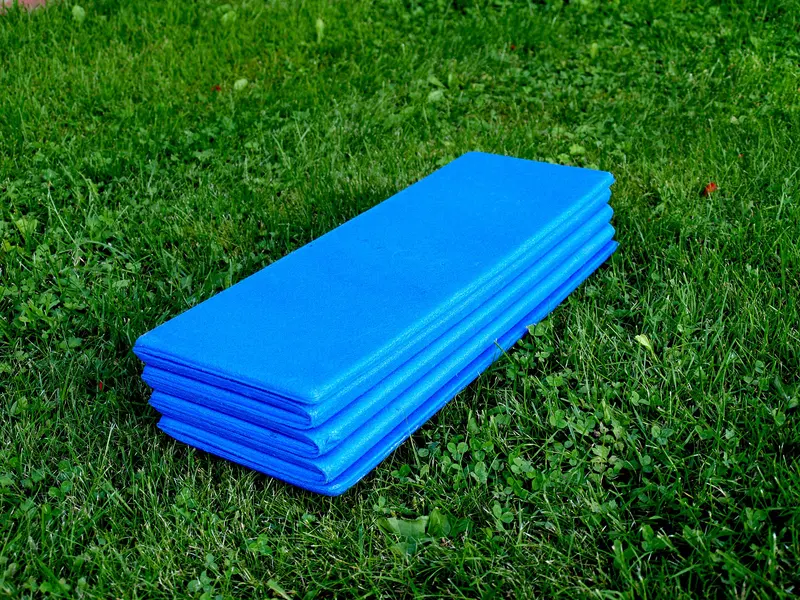
Folding exercise mat
Folds flat for storage — handy in small homes and for taking outside.
- Panels that lie flat
- Wipe-clean surface
Good for: Small spaces, garden workouts
Watch out for: Seams between panels
View on Amazon.co.uk Opens an Amazon.co.uk search so you can compare current options.